Our Blog

Plaque Attack? Let’s Fight Back!

March 29th, 2023

Plaque is a sticky subject! It sticks to the enamel of our teeth above and below the gum line, and it collects around fillings, braces, and other dental work. Plaque is one of the major causes of tooth decay and gum disease, and our teeth are under daily attack by this filmy menace.

What are the facts about plaque, and how can we fight back? Read on for some effective strategies!

What Is Plaque?

Plaque is a sticky film that builds up on our teeth, largely made up of millions of different types of oral bacteria. Plaque is a colorless biofilm at first, but as it collects, it takes on a white or yellow tint. If you haven’t brushed for a few days, that fuzziness you feel on your teeth is plaque build-up. Unless it’s removed, plaque hardens within a matter of days to become tartar.

  • Tip: You can remove plaque with careful brushing and flossing, but it takes a dental professional to remove tartar. Be proactive!

Why Does Plaque Cause Cavities?

Bacteria in plaque use our food as their food, especially sugars and carbs. They then transform these nutrients into acids, which attack our tooth enamel, weakening it and leaving it vulnerable to further erosion and eventual decay.

  • Tip: Cavities aren’t the only damage caused by accumulated plaque. Plaque also collects along and below the gum line. If tartar forms here, it irritates delicate gum tissue, leading to gingivitis and more serious gum disease. Make sure you don’t forget your gums when you brush and floss.

When Does Plaque Build Up?

The short answer? Plaque is always forming, because oral bacteria are a natural part of our biology. (In fact, there are even oral bacterial which are beneficial.) Plaque starts building up within minutes after eating, and during the night as we sleep.

That’s why we recommend brushing for two minutes at least twice a day, and flossing at least once a day. If you have braces or oral issues that make brushing more often advisable, ask us for suggestions for your best brushing schedule.

  • Tip: Just because plaque is unavoidable, that doesn’t mean we need to give the bacteria in plaque any additional encouragement. Every time you have a meal or a snack that’s heavy in carbs and sugars, you are providing more fuel for acid production. Cutting down on foods like sugary desserts and sodas is not only nutrition-healthy, it’s tooth-healthy!

Where Does Plaque Collect?

Plaque builds up all over tooth surfaces, at the gum line, and even below the gum line. It’s especially easy to miss in hard-to-reach places like the irregular surfaces of molars, between the teeth, behind our front teeth, and near the gum line.

  • Tip: One of the ways plaque avoids detection is its invisibility. Fortunately, if you’re having trouble brushing away all your plaque, there are plaque-disclosing toothpastes and chewable tablets available in the dental aisle which reveal the plaque hiding between, behind, or around your teeth by tinting it with a can’t-miss color. Just brush the color away, and you’ve brushed the plaque away as well.

How Do We Clean Away Plaque?

Use the Right Tools

Floss at least once a day. There are different materials, sizes, and coatings for floss, so you can find one that’s comfortable for you. Floss reaches those spots in between teeth and around the gum line that brushes miss.

Choose a soft toothbrush (soft bristles are better for your enamel) and change it every three to four months, or as soon as the bristles show wear. Make sure the head is the right size—too big, and it’s not only uncomfortable, but you won’t be able to reach all the surfaces you need to.

  • Tip: If you have trouble removing plaque with a manual toothbrush, consider an electric model. Several studies have shown a reduction in plaque with the use of an electric brush.

Use the Right Toothpaste

There are many toothpastes specifically formulated to fight plaque and tartar. And fluoride toothpastes not only fight cavities, they can strengthen your enamel.

  • Tip: Studies have shown that toothpastes with baking soda, in particular, are effective in reducing plaque. Ask us for a recommendation the next time you’re in for a cleaning.

Use the Right Technique

What not to do?  A forceful, horizontal sawing motion is awkward, hard on your enamel, and misses plaque and debris between the teeth. Technique is important—not for style points, but for cleaner teeth!

Hold your toothbrush at a 45-degree angle, especially at the gum line, to gently remove plaque from teeth and gums. Use short strokes or a circular motion to clean as much of the surface and between the teeth as possible. Brush the inside of your front teeth with careful vertical strokes—remember, that’s one place where plaque is easy to overlook. The same holds true for the tops of your molars, so thoroughly clean those uneven surfaces.

  • Tip: Do you floss before or after you brush? While both methods have benefits, many dentists and periodontists suggest flossing first. But really, if you are flossing daily, no matter what the order, you’re doing it right!

Who Can Help You Fight Plaque?

Even when you do your best at home, plaque can still be a sticky problem. That’s why we advise regular professional cleanings. We can not only remove any plaque that’s been overlooked, we can eliminate the tartar which can cause serious gum disease.  And, of course, we can give you all the information you need to keep your teeth their cleanest.

  • Final Tip: It’s important to schedule cleaning appointments at our Sioux Falls, SD office on a regular basis to help prevent tooth decay and gum disease. Ask us for phone, text, or email reminders when it’s time for your next cleaning.

True, you’re fighting plaque every day, but you have all the tools you need to make sure your teeth and gums stay healthy. You’re winning the battle with plaque every time you eat a nutritious meal, every time you brush and floss, every time you see Dr. Cody Henriksen for a checkup and a cleaning. With that kind of strategy, plaque doesn’t stand a chance. And your bright smile and healthy teeth and gums? That’s a victory worth celebrating!


Flossing Fixes

March 22nd, 2023

A length of floss plus your teeth is about as low-tech as it gets. But, as with so many other “simple” skills, it helps to learn just the right technique to avoid common mistakes and to make your flossing as effective as it can possibly be.

  • Choose the Right Floss for You

You’re getting ready to go out, and your floss keeps getting stuck, shredding, or snagging. You might try waxed flosses or flosses treated to glide easily through the teeth if this is a difficulty. (But do call us if it happens a lot—it could be a problem with a restoration, or a cavity, or some other condition we should address.) If you have the opposite problem, too wide a space between teeth for effective flossing, there are dental tape flosses that work with wider spacings. Braces? There are even specially designed dental flosses that thread between brackets and wires to access hard-to-reach plaque and food particles. If you’re unsure which product will work best for you, we have recommendations.

  • Don’t Be Too Hard on Yourself

Did you know dental floss is a handy kitchen tool? You can use (unflavored) floss to cut cakes into even layers, slice cheese, or divide a log of cookie dough into perfect rounds. Just pull the floss taut and saw away. But let’s not use this technique on delicate gum tissue! Gums can be injured by a vigorous, sawing motion. Instead, gently guide the floss between the teeth to the gums, and, when you reach the gum line, gently ease the floss up and down the tooth surface. But do remember, sometimes the gums are sore and sensitive because of too little flossing, not too much. Proper cleaning will help keep your gums both healthy and pain-free.

  • Technique Counts!

We often use floss to remove food particles from between the teeth, which provides instant dental gratification. But you are flossing for the long term as well. Proper flossing removes the plaque that leads to cavities from places your brush just can’t reach. Make sure you floss between each tooth, and don’t forget the back of those teeth on the end. The next time you visit our Sioux Falls, SD office for a cleaning, let us demonstrate the most effective techniques for gently removing plaque from beneath the gum area and on the tooth’s surface.

  • It’s All in the Timing

How much time should you spend flossing? That answer will depend on your individual needs. For some people, thorough and careful flossing once a day will be sufficient. For others, flossing more often might be advisable. We can help you decide how often and how long to floss.

It might take some time and practice to learn to floss effectively, but you will find your technique gets better and your flossing is accomplished more quickly once you have the basics down. If Dr. Cody Henriksen can offer any suggestions, don’t hesitate to ask!

Dental Emergencies while Traveling

March 22nd, 2023

You’ve planned your dream vacation. Your reservations are made. You’re packed and ready. You’ve even scheduled a dental checkup at our Sioux Falls, SD office to make sure you catch any potential problems, have finished any major work, and have an up-to-date chart.

But things don’t always go according to even the best of plans. So, what to do if you find you have a dental emergency while traveling? Dr. Cody Henriksen and our team have some recommendations for problems that might arise.

  • Toothache—Rinse your mouth with warm water and use dental floss to remove any food particles. Never put aspirin directly on a tooth or gum tissue. If the pain persists, call a dentist.
  • Cracked or broken tooth—Immediately rinse with warm water to clean the area and apply cold compresses to the face to minimize swelling. Get in touch with a dentist.
  • If you lose a tooth—Keep the tooth moist at all times. Put the tooth back in the socket without touching the root if possible. If that is not an option, place the tooth between the cheek and gums or in milk. See a dentist as soon as possible.

Know where to get help if you need it! If you are traveling in the United States, the American Dental Association offers Find-a-Dentist, a website that can locate a member dentist closest to you. If you are traveling to another country, there are steps you can take to prepare for an emergency.

  • If you are out of the country and need to locate a dentist, your local embassy or consulate, your hotel concierge, or friends abroad can be a useful resource.
  • Before you go, check your insurance to see if you are covered while traveling.
  • If you have travel insurance, find out if it covers dental treatment and can provide information on qualified local dentists and translation help, if necessary.
  • Good dental care is available in many areas internationally, but it is important to know what standards are present in the countries you plan to visit. The Organization for Safety and Asepsis Procedures offers a checklist for safe treatment in their “Traveler’s Guide to Safe Dental Care.”

If you have any questions, Dr. Cody Henriksen and our team are happy to do all we can to answer them. While it’s unlikely that problems will arise, we are always available if you need to contact our Sioux Falls, SD office. Bon voyage, and we look forward to hearing about your trip!

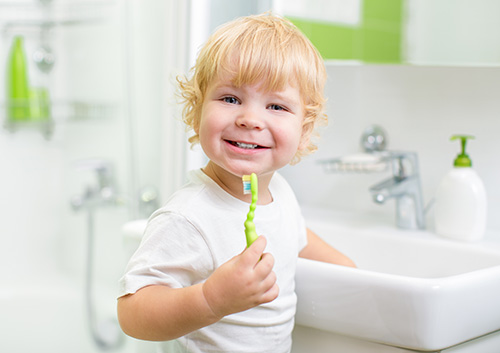
What kind of toothbrush and toothpaste should my child use?

March 15th, 2023

Dr. Cody Henriksen and our team know that as a parent, you want your child to be as healthy as possible. By now, you probably know that your son or daughter’s oral health plays a huge role in overall health.

When there are so many toothpaste ads and different styles of brush to choose from, it can be difficult to know which will serve your child the best. We recommend you break down the decision process to make it simpler.

First, your child’s age and stage of development are vital to consider. Until about the age or 12, your youngster may not be prepared to brush or floss adequately alone, due to dexterity issues. If that’s the case, it can be easier to use a battery-powered toothbrush to improve the quality of brushing.

Next is to select the right size of toothbrush head to fit your child’s mouth. As a general rule, the head of the toothbrush should be a little larger than the upper portion of the child’s thumb.

Flossers are great for children and easy to use. They have handles and a horseshoe shape on one end with floss in between. Your child can choose a color he or she likes as well as the handle size, shape, etc.

Not only are there many brands of toothpaste to choose from, there are also many different ingredients that offer varying benefits. Kids are at high risk for developing cavities so you want to make sure the following ingredients are in your child’s toothpaste if you wish to avoid problems later on.

Sodium fluoride is the standard ingredient for cavity prevention, while stannous fluoride is anti-bacterial and anti-cavity. Anti-sensitivity toothpastes often contain potassium nitrate, and triclosan can be found in one particular brand for anti-bacterial action.

Fluoride should not be ingested, so if your child can’t spit yet, use a toothpaste that contains xylitol. This is a natural sweetener and should be the first ingredient listed on the tube.

Now comes the fun part: choosing a flavor! Your little one may sample different flavors and select the one he or she likes the best. A youngster is more likely to adopt good brushing habits if the flavor is appealing.

Don’t hesitate to speak with Dr. Cody Henriksen if you need to make an appointment at our Sioux Falls, SD office, or if you have any questions about toothpastes or toothbrushes.

4501 E 41st St, Sioux Falls, SD 57110
(605) 339-1369
Monday
8:00am-5:00pm
Tuesday
8:00am-5:00pm
Wednesday
8:00am-5:00pm
Thursday
8:00am-5:00pm
Friday
8:00am-3:00pm
Hygiene appointments available at
7am on Mondays and Thursdays