
Our Blog

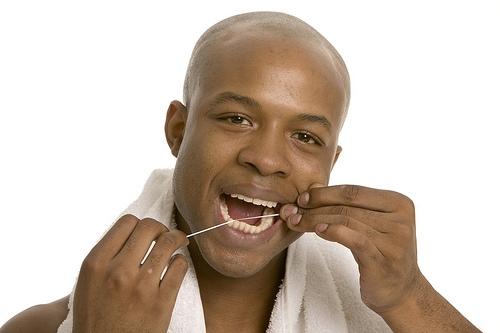
When is the best time to floss?

May 29th, 2024

At Dental Comfort Center, we prefer our patients to practice good oral hygiene between office visits. Part of that process includes flossing, which Dr. Cody Henriksen will tell you, is the process of cleaning between the teeth to remove food and debris from the areas that are hard to reach with a toothbrush. When food is allowed to remain between the teeth, it provides a breeding ground for bacteria, which can cause periodontal disease.

Should you floss before or after brushing?

You can floss either before or after brushing, according to your own preference. By flossing first, you can brush away dislodged food debris afterward. On the other hand, brushing first allows you to loosen plaque between the teeth, making it easier to floss more effectively.

Whichever you choose, the most important goal is to floss thoroughly. That means using a fresh strand of dental floss each day, and carefully pulling it back and forth between all of the teeth. Do not skip flossing because your teeth look or feel clean.

When to Floss

Unlike brushing, you need only floss between your teeth once per day. Although you may choose to do it in the morning or afternoon, many prefer to floss at night to prevent food and debris from remaining in the crevices of the teeth overnight. This could prevent the build-up of plaque too, which is a cause of tooth decay.

Help with Flossing

If you have questions about your flossing technique or what type of floss is best for your teeth, contact our office. Our staff will be more than happy to assist you in perfecting your home hygiene regimen. In most cases, you can choose between interdental cleaning picks or flexible floss strands to perform your daily flossing routine. If you have permanent oral appliances or restorations, be sure to follow the flossing instructions provided to you, and contact our Sioux Falls, SD office with any questions.

Digital X-rays

May 29th, 2024

X-rays are a vital diagnostic tool for any dental professional. X-rays help your endodontist perform a root canal, your orthodontist check the position of a tooth’s root, your oral surgeon discover a fracture. X-rays reveal what we can’t see with the naked eye—and that’s why they are an especially important tool for Dr. Cody Henriksen as well.

Why Are X-rays Necessary?

There’s a lot going on below the surface. An X-ray can reveal such conditions as cavities between teeth or underneath fillings, abscesses and other infections in the bone, impacted wisdom teeth, and cysts and tumors. They can also show the size, shape, and density of the bone beneath the teeth, which is essential information for dental implant procedures or dentures.

How Do X-rays Work?

Traditional X-rays, or radiographs, make use of film just like traditional cameras. When you have an intraoral X-ray, for example, the film is sealed in a moisture- and light-proof packet, and placed inside the mouth to capture images of specific teeth and the bone around them.

The X-ray machine is aligned precisely with the film and an exposure is taken. The image at this point is latent, and won’t show on the film, because, just like photo film, traditional radiographs need to be chemically processed before they produce a visible image.

Digital technology, on the other hand, uses an electronic sensor instead of film. For an intraoral digital X-ray, a small sensor is positioned in the mouth just like a film. When the X-ray is taken, a digital image capture device produces an image which is formed by a matrix of pixels instead of a photo-like film exposure. This format allows the image to be sent directly to a computer for immediate display without requiring processing.

Even though these methods seem very similar, digital X-rays offer some significant advantages over traditional films. Let’s look at how they compare, more or less.

  • More Diagnostic Advantages

A traditional X-ray is a fixed image. It cannot be modified or enhanced. Here the digital X-ray offers a clear advantage in diagnosis.

Just as you can enlarge certain types of images on your computer without blurring or losing detail, a digital X-ray uses computer software to magnify images while keeping their details sharp. They can also be enhanced through brightness and contrast applications to make details stand out even more. Both of these benefits are extremely helpful for diagnosis, especially when looking for small cavities, problems in the roots and surrounding bone, or developing wisdom teeth.

There is even digital subtraction radiography software available that can be used to compare recent images to older ones, removing (“subtracting”) all the similarities in the two images to display only the changes in the two—even small changes—that have taken place over time.

  • Less Exposure to Radiation

Dental X-rays expose patients to very low levels of radiation, and modern technology means traditional X-rays expose patients to less radiation than ever before. Even so, digital X-rays have significant advantages. Radiation exposure can be reduced by an additional 10%, 20%, or more with a digital radiograph.

  • More Convenient for Sharing and Transmitting

If you need to share your X-rays with another dental specialist or physician, digital technology allows you to simply have them e-mailed to another office or multiple offices. You no longer need to worry about preserving physical copies, either.

  • Less Waste

Unlike traditional X-rays, digital X-rays don’t need to be processed, so you save time in the office. And while the processing time is not significant (usually several minutes), if you need to repeat some X-rays for a clearer picture, or require different images for several teeth, this time can add up.

Digital X-rays are also more eco-friendly.  The fact that they don’t need to be developed means that the chemicals used to process traditional films are no longer necessary—which also means that there is no need to dispose of chemical waste products afterward.

Our goal is to provide you with the safest, most efficient, and most effective dental treatment possible, and digital X-rays help us do that. If you have any questions about digital X-ray technology, contact our Sioux Falls, SD office. We’re happy to explain the science—and the benefits—of high-tech radiography.

Shark Teeth

May 28th, 2024

It seems like sharks are everywhere these days—on land, sea, and air(waves). A halftime show meme gone viral. A week of summer TV devoted to our favorite apex predators. And who doesn’t have “Baby Shark” playing in their heads all day once they’ve heard it? But are we jumping the shark to discuss this topic in a dental blog?

Not at all! Because today, we’re going to talk about shark teeth—just not the ones you might be expecting.

One of the expected sights when a shark opens its mouth are those rows and rows of shiny shark teeth. Sharks can grow from two to 15 rows of teeth at any one time (and some sharks have even more). This means sharp new teeth are always ready to replace any shark tooth which is lost, broken, or worn out.

An unexpected sight? When children point to their new adult tooth or teeth coming in—right behind their still-firmly rooted baby teeth! This double set of teeth is called “shark teeth,” and, while it certainly might come as a surprise, it’s not all that uncommon. But why do children develop shark teeth at all?

After all, baby, or primary, teeth have small roots, and are designed to come out easily when the adult teeth start arriving. When a permanent tooth starts to erupt, it pushes against the root of the baby tooth above it. This pressure gradually dissolves the root of the primary tooth, and with nothing to anchor it, it’s now loose, wiggly, and ready to fall out. That’s why baby teeth often look like they have no roots at all when they eventually wiggle free.

Sometimes, though, the roots of a primary tooth don’t break down, which means baby teeth stay right where they are. It also means that the permanent teeth have to erupt somewhere else—usually behind those stubborn little baby teeth.

Shark teeth can first appear around the ages of five to seven when the permanent front teeth start arriving, or several years later, when the adult molars begin to come in. Any extra teeth in one small jaw naturally cause concerns about crowding and misalignment, especially when those extra teeth are molars. Fortunately, treatment is generally uncomplicated.

If the baby tooth is loose, time (and wiggling) might take care of the problem. But if the primary tooth or teeth just won’t budge, even after several weeks, it’s a good idea to schedule a visit with Dr. Cody Henriksen—especially if your child is experiencing pain or discomfort.

An extraction is often suggested when a baby tooth has overstayed its welcome. Because of its smaller root, extracting a primary tooth is usually a straightforward procedure. Dr. Cody Henriksen can let you know all the details, and can discuss sedation options if they’re appropriate for your child.

Whether baby teeth are left to fall out on their own, or given some assistance, most often your child’s permanent tooth will start moving to its proper position as soon as the space is available.

Unlike sharks, we don’t have an endless supply of replacement teeth, so it’s understandable to worry when you see anything unexpected. If you want to know more about shark teeth, or if you have any concerns, don’t hesitate to call our Sioux Falls, SD office for expert advice.

Three Reasons We're Fans of Fluoride

May 28th, 2024

Why all the fuss about fluoride? Your dentist recommends it, your toothpaste is formulated with it, most of our drinking water contains it. Just what is it about this mineral that makes dental professionals sing its praises? Read on for three good reasons why fluoride is a healthy choice for healthier teeth.

  1. Fluoride Works!

Fluoride is an attractive option for protecting your teeth—and we mean that literally. Fluoride protects the surface of your teeth by working on a molecular level to attract minerals which strengthen enamel and help prevent cavities.

Our tooth enamel is mostly made from calcium and phosphate ions. These elements combine to form hydroxyapatite, strong crystals which make up about 95% of our enamel. Hydroxyapatite is so strong, in fact, that tooth enamel is the hardest part of our bodies. What can go wrong?

Acids. Acids created by the bacteria in plaque and the acids in our diet strip away the calcium and phosphate ions in enamel, weakening the surface of the tooth. This process is called demineralization. Over time, weak spots become bigger as acids eat through enamel to the inner tooth, causing decay and cavities.

So, what can fluoride do?

First, fluoride helps remineralize tooth enamel. Fluoride is attracted to the tooth’s surface and bonds with its minerals. It also attracts the calcium and phosphate ions which are found in our saliva to restore any minerals which have been lost. This process helps repair any weak spots that might have begun to form.

But fluoride does more than restore and repair tooth strength—it improves it! Fluoride ions join with calcium and phosphate to form fluorapatite crystals, which are larger and stronger than hydroxyapatite crystals.

Want more? Fluoride may interfere with bacterial plaque’s ability to produce acids. Since plaque and its acids are a major cause of gum disease, brushing with a fluoride toothpaste is a great way to help prevent plaque buildup around and below the gum line—buildup that leads to irritated, inflamed, and infected gum tissue.

  1. Fluoride Is Doubly Effective

Fluoride works both externally and internally. We just looked at how fluoride helps keep teeth strong when applied to the outside of the teeth. This is called a topical application. Systemic benefits come the fluoride we consume in our diets.

Fluoride isn’t found in many foods, but it is found naturally in lakes, rivers, and other water sources. When the local water’s fluoride level is low, many communities add fluoride for its proven ability to prevent cavities. Water fluoridation is safe, has been studied for decades, and has been shown to reduce the risk of cavities by 25% or more for both children and adults.

Systemic fluoride is especially important for your child’s dental health. This is because fluoride incorporates with minerals in the adult teeth while they are growing and developing, creating stronger, more cavity-resistant teeth even before they erupt. Most adult teeth have finished forming around age eight, so, if your community doesn’t have fluoridated water, it’s a good idea to discuss other options with your child’s dentist.

And we grown-ups benefit, too! When you drink fluoridated water, you’re increasing the amount of fluoride in your saliva. Just like fluoride toothpaste, saliva bathes your teeth with fluoride ions, strengthening the tooth surface, and helping to neutralize the acids which damage teeth and gums.

  1. It’s Easy to Get Fluoride Protection

Most toothpastes are formulated with fluoride, so you’re getting the enamel-strengthening benefits of this mineral whenever you brush—at least twice each day. Since children can’t really grasp the “rinsing” and “spitting” steps of the brushing routine just yet, talk to Dr. Cody Henriksen about how to introduce tiny amounts of fluoride toothpaste to your child’s dental routine. Baby steps!

Because so much of our drinking water is fluoridated, most of us really don’t have to think about how to get the recommended amount of fluoride each day. If your community’s water is low in fluoride, we can help you here as well. Prescription fluoride rinses, gels, supplements, and other treatments are available to make sure that your teeth are well-protected, wherever you may live. We will let you know which products are best for you and how often to use them during your next visit to our Sioux Falls, SD dental office.

Fluoride isn’t, of course, the only way to look out for your dental health. Proper brushing and flossing are still essential for removing plaque. Check into sealants for both kids and adults for long-lasting protection for chewing surfaces. But when it comes to a proven cavity-fighter and plaque-reducer that is simple to use, effective, and easily available—is it any wonder we’re big fans of fluoride?

4501 E 41st St, Sioux Falls, SD 57110
(605) 339-1369
Monday
8:00am-5:00pm
Tuesday
8:00am-5:00pm
Wednesday
8:00am-5:00pm
Thursday
8:00am-5:00pm
Friday
8:00am-3:00pm
Hygiene appointments available at
7am on Mondays and Thursdays